Scrolling through job listings can feel exciting… until it doesn’t.
At first glance, everything sounds great: fast-growing company, competitive salary, cool culture. But hidden inside many job descriptions are quiet warning signs that experienced job seekers learn to spot early.
These are called job description red flags—and noticing them can save you months (or years) of stress, burnout, and regret.
In this guide, we’ll break down 5 major red flags, translate what they actually mean, and show you real examples so you can protect yourself during your search.
What Does a “Red Flag” Mean at Work?
A red flag is a warning sign that something may be wrong beneath the surface—with management, expectations, workload, or company culture.
The biggest mistake job seekers make is ignoring these signals because they need a job quickly. In job postings, these flags usually disguise themselves as:
Buzzwords that sound positive but hide pressure.
Vague language (“We’re a family!”)
Unrealistic expectations (“Ninja wanted”)
The 5 Biggest Job Description Red Flags (You Should Never Ignore)
1. “Self-Starter” With No Support Mentioned
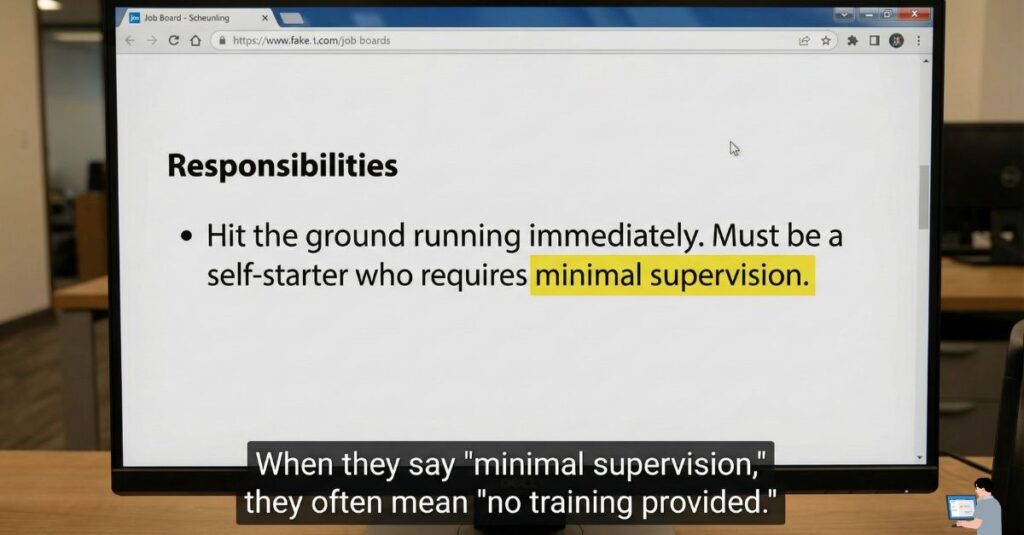
You’ll often see phrases like “Must be a self-starter” or “Hit the ground running.” On the surface, this sounds empowering. In reality, it is often code for “we have no training program.”
The Real-World Translation:
| What The Job Description Says | What It Usually Means |
| “Must be a self-starter” | We have no onboarding process. You are on your own. |
| “Minimal supervision” | Your manager is too busy (or absent) to help you. |
| “Hit the ground running” | We are already behind schedule and need you to fix it immediately. |
The Verdict: A healthy company mentions support, mentorship, or collaboration alongside independence. If “self-starter” appears alone, proceed with caution.
2. One Role, Five Jobs (Disguised as “Flexible”)
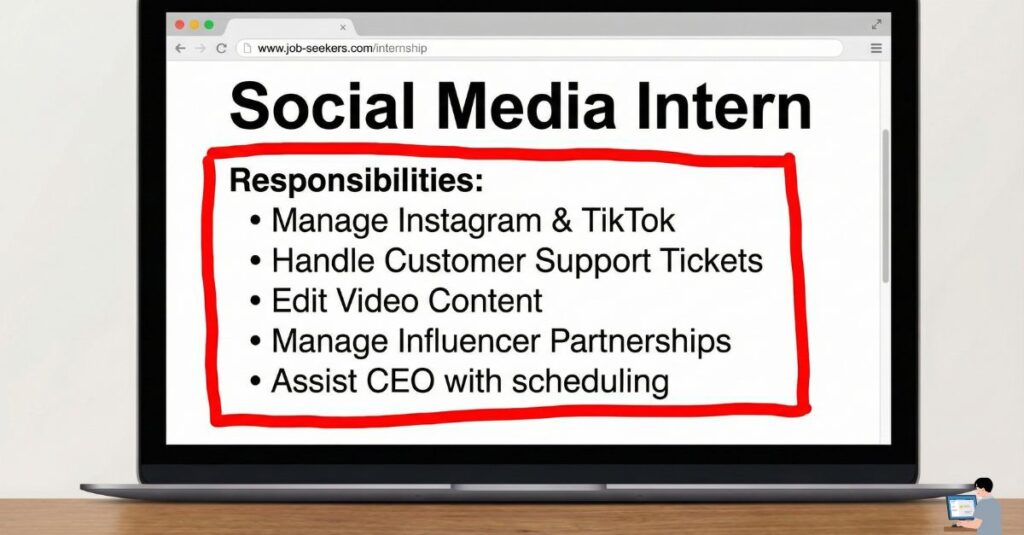
Be careful of job descriptions that list responsibilities across unrelated departments. For example, asking a “Marketing Manager” to also handle Sales, Customer Support, and Operations.
This is one of the most common job description red flags Reddit users warn about, especially in startups.
⚠️ Warning Sign: If the role reads like three different jobs merged into one salary, expect long hours, constant context switching, and inevitable burnout. Flexibility is fine; being responsible for everything is not.
3. “Fast-Paced Environment” Without Boundaries
This phrase appears everywhere: “We’re a fast-paced, high-energy company!”
Sometimes that is true and healthy. But when it is repeated multiple times with zero mention of work-life balance or team structure, it signals chaos.
Many toxic workplaces use “fast-paced” to normalize:
- Chronic Overwork: Everything is an emergency.
- Poor Planning: Management changes direction daily.
- Constant Urgency: You will be expected to reply to emails at 9 PM.
4. Vague Salary or “Competitive Pay” Only
If a job description avoids listing a salary range or benefits and only says “Competitive Salary,” pause immediately.
Why this is a major red flag:
- The Question: Competitive compared to what?
- The Reality: Usually their internal budget, not the market rate.
- The Question: Why hide it?
- The Reality: Transparent companies are upfront. Hiding it often means they want to lowball you based on your current salary.
Pro Tip: If they won’t talk about money in the description, they likely won’t respect your value in the offer.
5. Unrealistic “Perfect Candidate” Requirements
Watch out for the “Unicorn Hunter” posting. These are descriptions asking for:
- 5–7 years of experience in a tool that launched 2 years ago.
- Expert-level skills in Coding, Design, and Sales.
- “Rockstar,” “Ninja,” or “Guru” titles.
The Reality: No one can realistically meet every bullet point. Companies that expect this usually have managers who don’t understand the role, leading to high turnover and frustration.
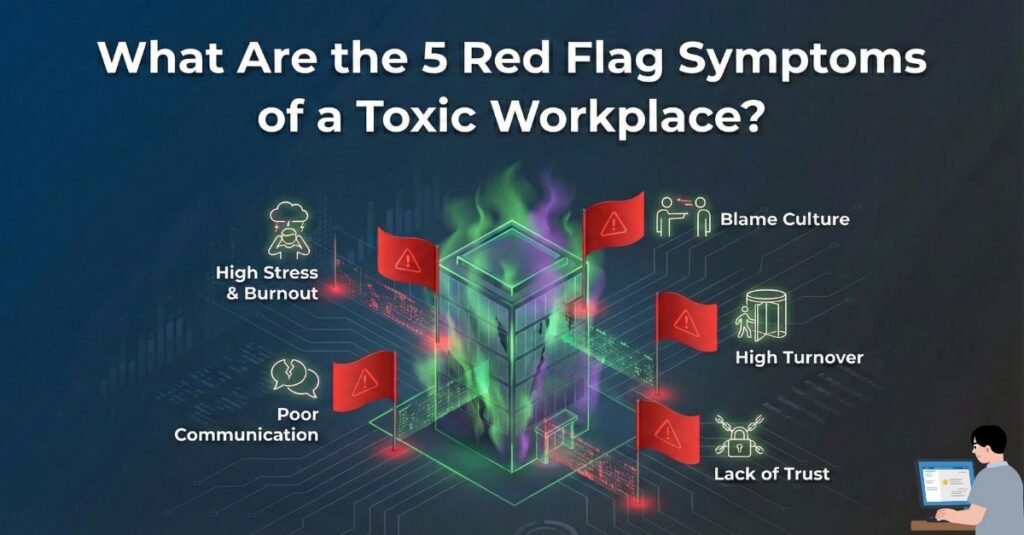
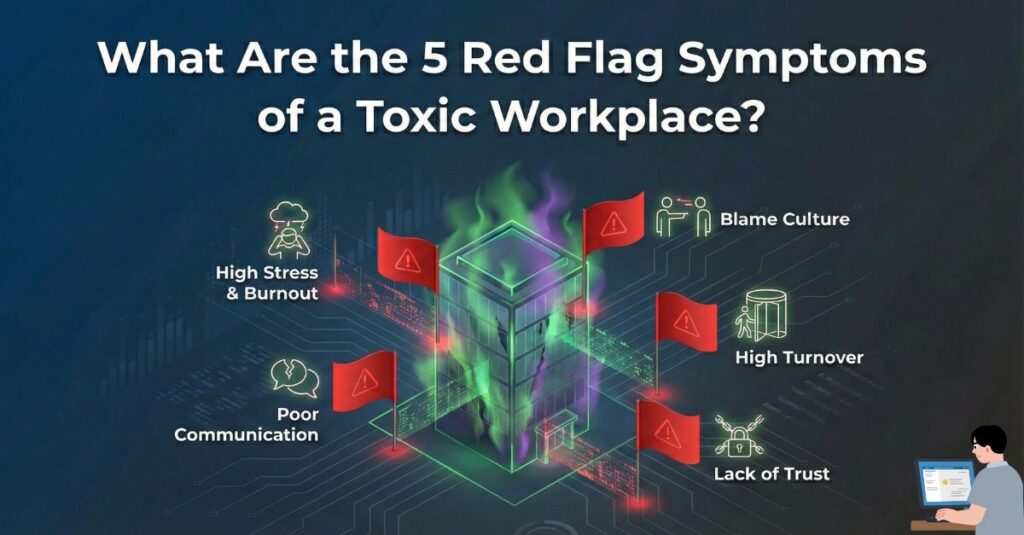
What Are the 5 Red Flag Symptoms of a Toxic Workplace?
When these red flags turn into real-life problems, they usually manifest as The Toxic 5:
Lack of Clarity: You never know if you are doing a good job.
Constant Urgency: Everything is due “yesterday.”
Blurred Boundaries: Texts and calls on weekends are normal.
Fear-Based Management: People are afraid to speak up.
High Turnover: Employees leave within a year (check their LinkedIn insights!).
FAQs: Reading Between the Lines
Q: Do phrases like “we’re like a family” always mean overwork?
A: Not always, but often. “Family” implies emotional obligation. In a business context, it is often used to guilt employees into working unpaid overtime or accepting poor boundaries.
Q: Are flashy titles like “Ninja” or “Rockstar” a red flag?
A: Yes. These titles replace clarity with hype. They often signal a culture that values “hustle” and output over sustainability and process.
Q: Why do entry-level jobs ask for 3–5 years of experience?
A: This typically means the company wants mid-level performance at a junior-level salary. It is a classic sign of a company trying to cut costs at your expense.
Q: Should I apply if the salary range is extremely wide (e.g., $50k – $120k)?
A: Proceed cautiously. Huge ranges often indicate poor planning or that the compensation will be based entirely on how well you negotiate, not what the role is worth.
Final Verdict: Trust Your Gut
Not every job description red flag means the workplace is definitely toxic—but patterns matter.
If you notice multiple vague phrases, overloaded responsibilities, and pressure-heavy language, it is okay to walk away.
A good job should challenge you—not drain you.