
We’ve all seen them.
A random WhatsApp message promising “$2,000 per week for part-time work.”
An email from a “recruiter” using a Gmail address instead of a real company domain.
A job offer that feels exciting… but also strangely rushed.
In 2026, fake job postings are no longer obvious. Scammers now use:
- Professional-looking websites
- Stolen company logos
- Fake LinkedIn profiles
- Real job boards like Indeed and LinkedIn
If you’re not careful, one wrong reply can cost you money, personal data, or your identity.
The good news?
You can now use AI as your personal fraud detector.
AI tools like ChatGPT, Gemini, and Claude have been trained on millions of real emails, job offers, and scam scripts. They can recognize patterns humans often miss — especially when emotions are involved.
This guide shows you exactly how to spot fake job offers instantly using AI, plus what red flags no legitimate employer will ever cross.
Table of Contents
Why Fake Job Offers Are Harder to Spot Now
Scammers understand psychology.
They target:
- People urgently looking for work
- Remote job seekers
- Students and fresh graduates
- Career switchers
And they exploit confirmation bias — the human tendency to believe what we want to be true.
AI doesn’t have emotions.
It doesn’t feel hope or desperation.
It looks only at language patterns, structure, and logic.
That’s why AI catches red flags faster than humans.
Common Red Flags AI Instantly Detects
When analyzing a job offer, AI looks for patterns like:
- Urgency tactics
“Reply within 2 hours”
“Limited slots available” - Unrealistic pay
High salaries for simple or unskilled tasks - Unprofessional communication
Grammar mistakes, inconsistent tone, vague job titles - Suspicious payment methods
Checks, Zelle, Venmo, crypto, or “refundable deposits” - Fake contact details
Gmail/Yahoo emails instead of company domains
These signals appear again and again in fake job postings Reddit users warn about.
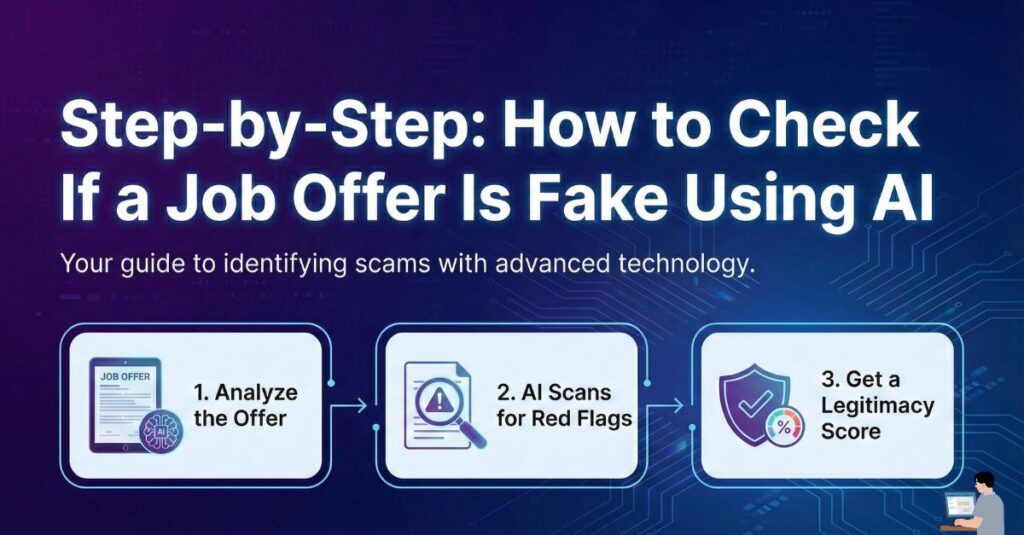
Step-by-Step: How to Check If a Job Offer Is Fake Using AI
Step 1: Copy the Job Offer Text
Copy the entire message:
- WhatsApp/Telegram text
- Job description
⚠️ Do NOT click links yet.
Step 2: Open Any Free AI Tool
You can use:
- ChatGPT (free version)
- Google Gemini
- Microsoft Copilot
- Claude
All work fine for this task.
Step 3: Use This Exact “Scam Detector” Prompt
Paste this into the AI:
Act as a Cybersecurity Expert and HR Professional.

I received the following job offer and I am concerned it may be a scam.

Please analyze it for these red flags:
- Unrealistic salary
- Urgency or pressure tactics
- Poor grammar or unprofessional tone
- Requests for payment, bank details, or ID
- Suspicious email domains or contact methods

Here is the text:
[PASTE JOB OFFER]

Give me a probability score (0–100%) that this is a scam and explain why.
This forces the AI to think critically, not guess.

Step 4: Read the Breakdown (Not Just the Score)
If the AI says:
- High probability (70–100%) → delete and block
- Medium probability → proceed with extreme caution
- Low probability → still verify manually
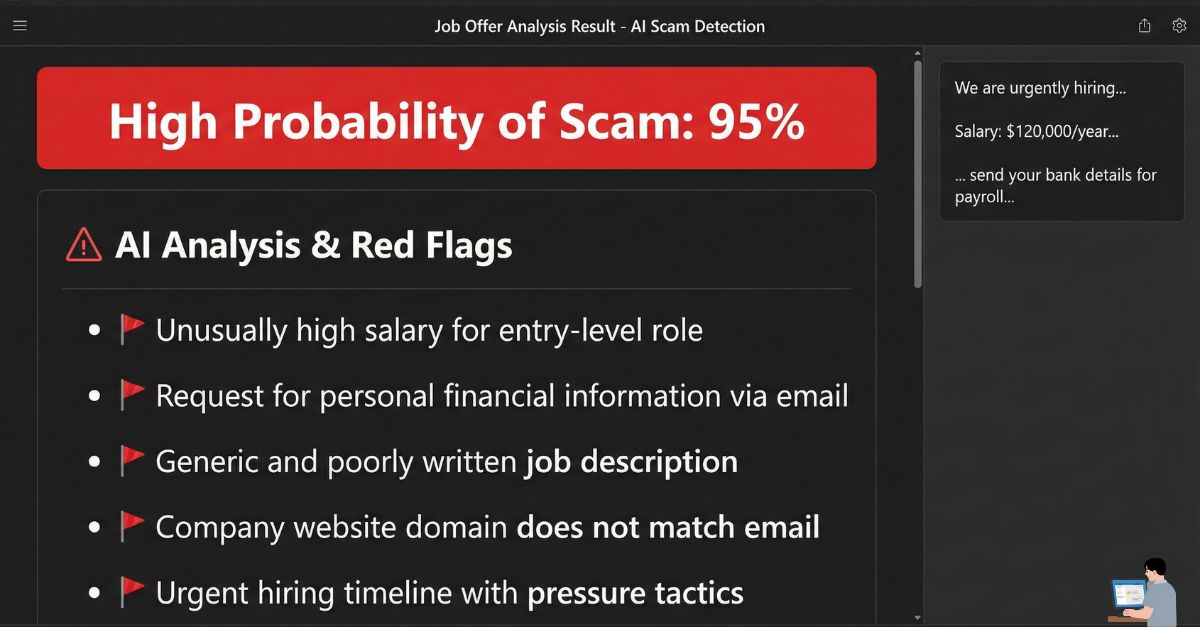
AI is a filter, not blind trust.
Real Example: The “Task Scam”
A common scam message says:
“Get paid $100/day for rating movies or apps.”
AI flags this immediately:
- Pay is unrealistic
- No real employer hires via WhatsApp
- Task-based crypto or rating jobs often lead to payment traps
This scam appears constantly in fake job postings Reddit threads.
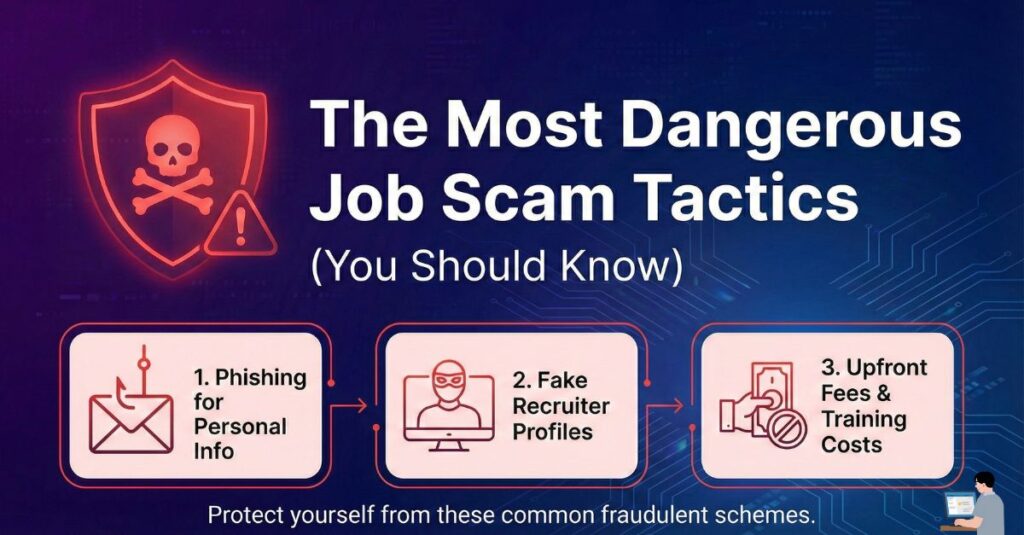
The Most Dangerous Job Scam Tactics (You Should Know)
1. The “Check for Equipment” Scam
If a company:
- Sends you a check
- Asks you to buy equipment
- Then asks you to send leftover money back
👉 It’s always a scam.
Legitimate companies buy equipment themselves.
2. Paying to Work
Any request for:
- Training fees
- Laptop insurance
- Registration or verification fees
🚩 Immediate red flag.
No real job requires upfront payment.
3. Instant Hire Without Interview
If you’re hired:
- Without a phone or video call
- After a text-only chat
- Within hours of applying
That’s not efficiency — that’s fraud.
4. Suspicious Communication
Red flags include:
- Recruiter uses Gmail/Yahoo
- You can’t find them on LinkedIn
- Email domain looks like
company-careers.netinstead ofcompany.com
Real recruiters are traceable.
How to Spot Fake Job Postings on Indeed & LinkedIn
Even trusted platforms aren’t immune.
Watch out for:
- Jobs reposted repeatedly
- No clear company page
- Vague role descriptions
- “Remote data entry” with high pay
- Requests to move conversation off-platform immediately
Many users report these in fake job postings on Indeed Reddit discussions.
How to Check If an Offer Letter Is Real or Fake
“If the offer is real and they invite you to an interview, don’t be nervous. Use my guide on [How to Turn ChatGPT Into a Mock Interviewer] to practice and secure the job.”
Ask yourself:
- Does the company exist independently of the offer?
- Is the domain real and consistent?
- Can you verify the hiring manager on LinkedIn?
- Was there a proper interview process?
If anything feels rushed or secretive, pause.
3 Manual Checks You Should Always Do (Even If AI Says “Low Risk”)
- Email Domain Check
@company.comis normal@company-jobs.netis suspicious - Video Call Test
Refusal to do Zoom/Teams with camera = scam - Never Share Sensitive Info Early
SSN, passport, bank details come after onboarding — never before
Why Fake Job Postings Are Becoming a Real Problem
Scammers now:
- Scrape real job descriptions
- Clone company branding
- Target global job seekers
That’s why learning how to spot fake job offers online is no longer optional — it’s essential.
FAQs: Spot Fake Job Offers Instantly
1. What is a common example of a fake job offer?
High pay for easy remote work, instant hiring, no real interview, and requests for fees, bank details, or equipment purchases.
2. How can I quickly identify fake job posts online?
Look for urgency, unrealistic salaries, poor grammar, off-platform contact (WhatsApp/Telegram), and any request for money or personal data.
3. How do I check if a job offer or offer letter is real?
Verify the company and recruiter on LinkedIn, check the email domain, confirm a live interview occurred, and analyze the offer with an AI tool.
4. Is it a scam if a company sends a check or asks me to pay upfront?
Yes. Legitimate companies never send checks, ask for training fees, or require “refundable” deposits for equipment.
5. Can a real company hire me without a video or phone interview?
No. Text-only interviews or instant offers are major red flags and commonly reported scams.
6. Are Gmail emails or WhatsApp recruiters normal?
No. Real recruiters use official company domains and professional hiring platforms.
7. Are “too good to be true” jobs on Indeed or LinkedIn real?
Usually not. Roles offering high pay for low effort are frequently flagged as fake on Reddit and job forums.
Final Verdict: Let AI Be the Skeptic You Can’t Be
Scammers rely on emotion.
AI relies on patterns.
By taking 30 seconds to copy and paste a job offer into an AI tool, you add a powerful layer of protection that can save you:
- Money
- Time
- Personal data
- Stress
When in doubt, don’t reply.
Copy. Paste. Analyze.
Let AI question the offer — so you don’t have to learn the hard way.