
It’s 11:00 PM. Your eyes burn. You have just customized your resume for the 20th time today, hit “Easy Apply” on LinkedIn, and closed your laptop.
Tomorrow, you will wake up to an inbox full of… nothing. No rejections. No interview requests. Just silence.
If this feels familiar, I need you to know something: It is not your fault.
You aren’t being rejected; you are being ignored. You are likely falling victim to the growing epidemic of “Ghost Jobs”—postings for positions that are already filled, on indefinite hold, or never existed in the first place.
It is emotional torture. You are pouring your time and hope into a black hole.
But you don’t have to keep playing their game. In 2026, you can use AI tools not just to write your resume, but to perform background checks on the jobs themselves.
Here is your personalized guide to using AI as a “Ghost Job Detector” so you only apply to companies that are actually hiring.
Table of Contents
What Is a Ghost Job? (The Validation You Need)
Yes, ghost hiring is very real. Recent data suggests some platforms have upwards of 30-50% of listings that are inactive.
Why do companies do this? It seems cruel, but the reasons are usually cynical business tactics:
- Pipeline Building: They want a stack of resumes ready just in case someone quits in six months.
- Looking Busy: They want investors or competitors to think they are growing, even if they have a hiring freeze.
- Lazy HR: They filled the role a month ago but simply forgot to take the LinkedIn posting down.
You cannot wait for the laws to change to fix this. You need to protect your time now.
The AI “Ghostbusting” Workflow
Don’t just blindly click apply. Before you spend 30 minutes tailoring a cover letter, spend 30 seconds running a background check with an AI tool that has web access (like Perplexity, Bing Chat/Copilot, or Gemini).
Step 1: The “Recency & Reality” Check
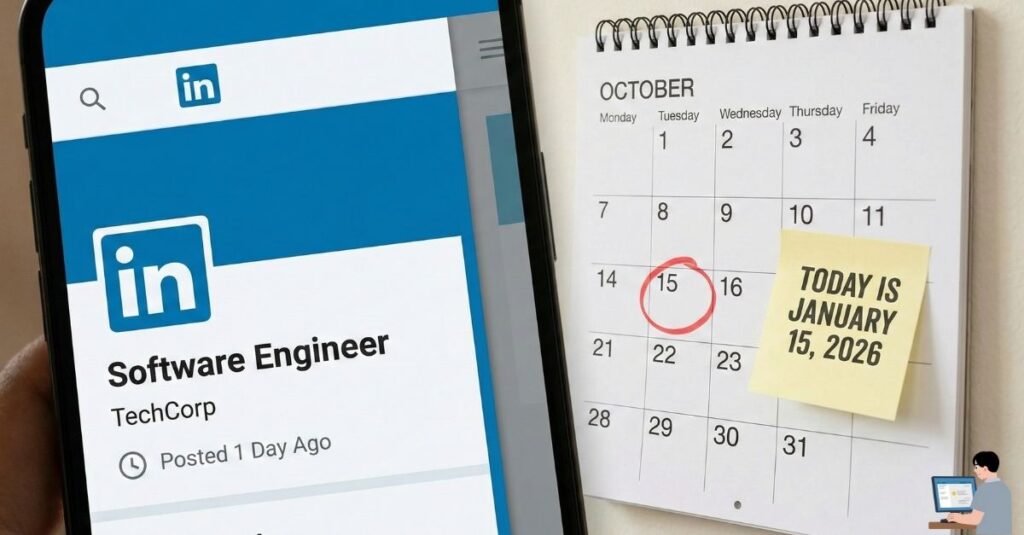
The Pain Point: LinkedIn often shows a job as “Posted 1 day ago” when it was actually just reposted automatically. The job might be 6 months old. The Fix: Use AI to find the original source.
Copy This Prompt (Use in Perplexity/Bing):
“I am looking at a Job Posting for [Job Title] at [Company Name] in [Location].
1. Find the official career page on the company’s actual website for this role. Does the job exist there? 2. Search for when this specific job title at this company first started appearing on job boards. Is this a recent opening or a months-old repost?”
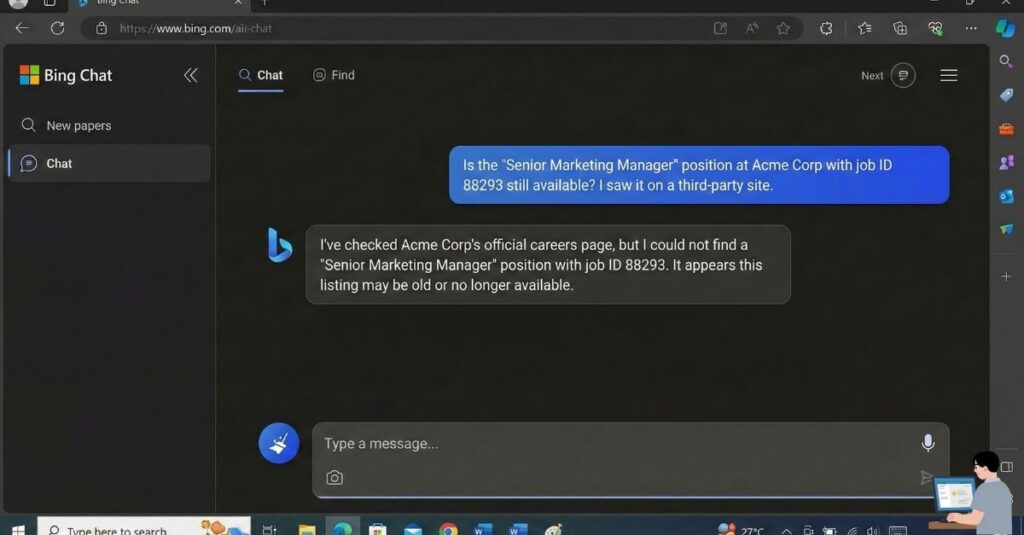
How to read the output: If the AI says, “I cannot find this role on their official career site,” it is 95% likely a ghost job. Move on.
Step 2: The “Growth Signal” Check
The Pain Point: Applying to companies that are secretly having layoffs. A company might have 50 open job postings, but if they just laid off 10% of their staff yesterday, those jobs are likely frozen. The Fix: Use AI to scan the news for conflicting signals.
Copy This Prompt:
“Analyze recent news and financial reports for [Company Name] over the last 3 months.
Are there signals of growth (e.g., new funding, expansion, hiring sprees) or signals of distress (e.g., layoffs, hiring freezes, budget cuts)? Based on this, how likely is it that they are actively hiring for new roles right now?”
Video Insight: The Reality of the Job Market
To understand just how pervasive this issue is, watch this investigation by the Wall Street Journal. It validates exactly why the “spray and pray” method of applying doesn’t work anymore.
(Video Title: Why Companies Are Posting ‘Ghost Jobs’ – WSJ)
FAQ: Real Questions, Blunt Answers
Q: How can I tell I’m applying for a ghost job manually?
A: Look for these red flags before you even use AI:
- The job has been “reposted” many times over several months.
- There are 1,000+ applicants (it’s likely already filled or ignored).
- The description is incredibly vague.
- You cannot find a human recruiter linked to the post.
Q: Is there an AI that can apply to jobs for me?
A: Yes, “Auto-Applier” bots exist (like LazyApply). My Honest Advice: Be careful. While tempting, these tools often spam your resume into ghost jobs, increasing the noise. Quality over quantity wins. Use AI to verify the job first, then apply yourself.
Q: What is the “7 Second Rule” in resumes?
A: This is the average time a human recruiter spends looking at a resume before deciding Yes or No. You must optimize the top 1/3 of your resume with keywords and clear metrics to pass this 7-second scan.
Q: What’s the quickest way to find a job?
A: The quickest way is to skip the “Cold Application” line entirely. Use AI to identify a hiring manager at a target company, write a personalized connection request, and ask for a 15-minute virtual coffee chat. Networking is faster than applying to black holes.
Final Verdict: Take Back Control
The job market is tough right now, and companies are playing dirty with ghost postings.
But you don’t have to be a victim of their lazy HR practices. By adding a 60-second “AI background check” to your routine, you stop wasting emotional energy on roles that don’t exist.
Stop applying to ghosts. Start hunting for real opportunities.