
The most expensive real estate in the world isn’t in New York, Dubai, or London.
It’s the first 3 seconds of your ad.
On Facebook, Instagram, TikTok, or YouTube, people don’t “watch” ads anymore—they scan them. If your hook doesn’t stop the scroll immediately, your ad is dead. Your CPC goes up, your reach drops, and your budget burns quietly.
The hardest part?
Not targeting. Not creatives.
It’s writing that one brutal opening line.
The good news: you don’t need to be a genius copywriter. You need better prompts.
Table of Contents
Why Most AI Ad Hooks Fail (And How to Fix It)
Most people ask AI things like:
“Write an ad hook for my product.”
That’s why the output sounds like:
“Are you tired of struggling with X?”
Generic. Predictable. Ignored.
AI isn’t bad at copywriting.
Your instructions are.
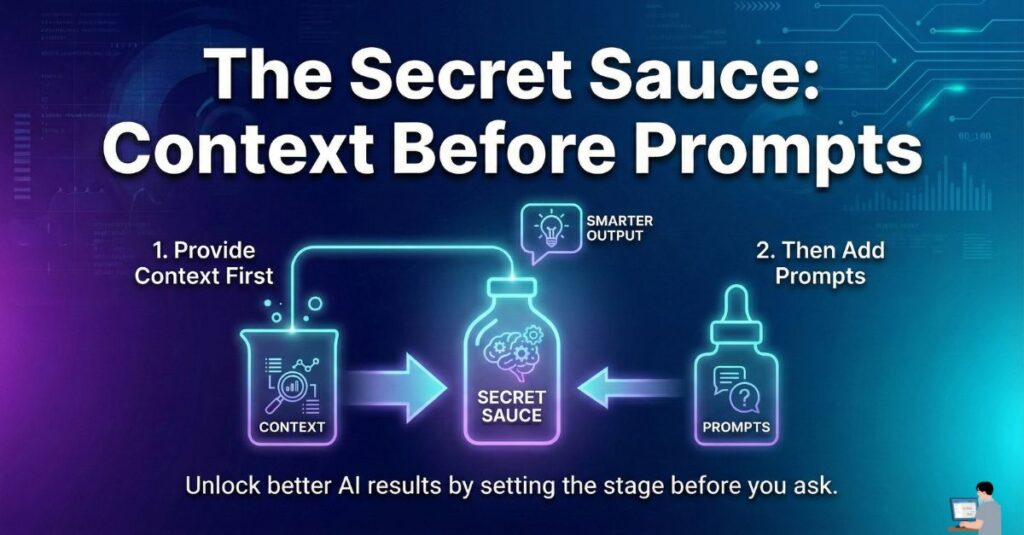
High-converting hooks come from context + psychology, not vibes.
The Secret Sauce: Context Before Prompts
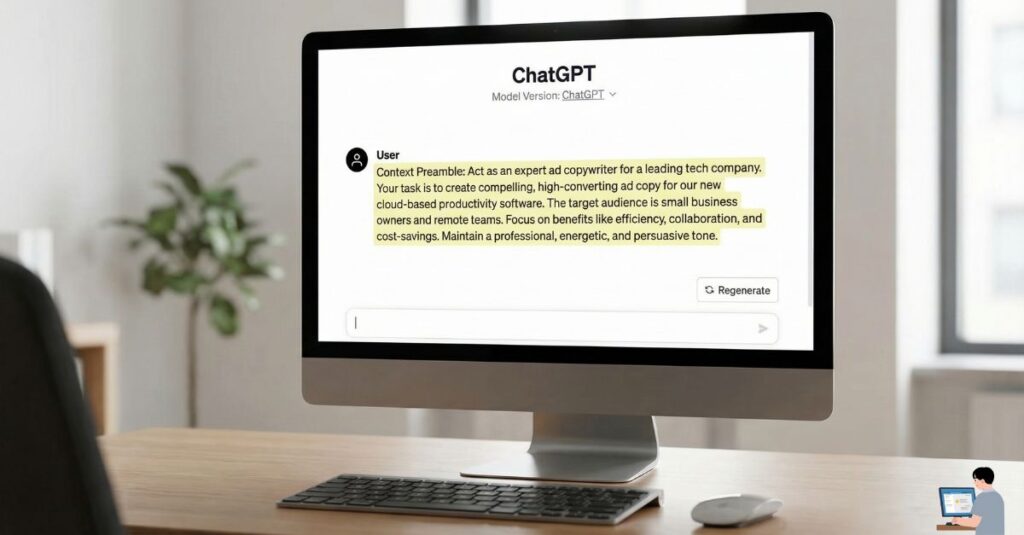
Before using any hook generator AI, give it proper context.
Copy-Paste This First (Do Not Skip)
Context Preamble:
You are a world-class direct response copywriter specializing in Meta, TikTok,
and YouTube ads. You understand persuasion, buyer psychology, and scroll-stopping hooks.

My product is: [INSERT PRODUCT]
My target audience is: [INSERT AUDIENCE]
Their biggest pain is: [INSERT PAIN]
The main outcome I promise is: [INSERT RESULT]
The tone should be: [Bold / Calm / Premium / Casual]
Avoid generic phrases and avoid obvious AI language.
This single step solves 80% of the “AI sounds robotic” problem people complain about on Reddit and LinkedIn.
Prompt 1: The Problem–Agitation Hook
Best for: Pain-driven offers (health, productivity, money, SaaS)
Why it works:
It makes the viewer feel seen. Pain-first hooks outperform benefit-first hooks on cold traffic.
Prompt:
Using the context above, write 5 short ad hooks (under 15 words)
that directly call out the user’s current pain.
Agitate the frustration, then hint that a solution exists.
Avoid questions that start with “Are you tired of…”
Example Output:
- “Your back hurts because your chair is lying to you.”
- “You’re doing everything right—and still not getting results.”
Prompt 2: The Negative Curiosity Gap
Best for: TikTok, Reels, YouTube Shorts
Note: These platforms are visual. Once you have the hook, use my guide on [How to Create Viral Infographics with AI] to create the visuals that match your script.
Why it works:
Humans are wired to avoid mistakes more than to seek gains.
Prompt:
Generate 5 hooks that reveal a common mistake my audience is making.
Create curiosity by implying they’re unknowingly sabotaging themselves.
Avoid hype. Make it sound like insider knowledge.
Example Output:
- “This ‘healthy habit’ is why your energy crashes at 3 PM.”
- “Most people use this tool completely wrong.”
Prompt 3: The Us vs. Them (Tribal Hook)
Best for: Disruptive products, niche audiences
Why it works:
People bond over shared enemies—especially outdated advice.
Prompt:
Write 3 polarizing hooks that challenge mainstream advice in my industry.
Position my product as the smarter alternative insiders use.
Keep it confident, not conspiracy-driven.
Example Output:
- “The industry profits when you stay confused.”
- “What gurus won’t tell beginners about growth.”
Prompt 4: The Instant Specific Result
Best for: Tools, apps, low-friction offers
Why it works:
Specificity = credibility. Speed = attention.
Prompt:
Generate 5 hooks promising a clear, specific result
within a realistic timeframe.
Use numbers, timeframes, or measurable outcomes.
Avoid vague words like ‘better’ or ‘faster.’
Example Output:
- “Turn 3 hours of work into 12 minutes.”
- “Write 30 posts in one sitting.”
Prompt 5: The Skeptical Challenge
Best for: High-ticket or skeptical audiences
Why it works:
It disarms resistance by acknowledging doubt.
Prompt:
Write 3 hooks that challenge the viewer’s skepticism directly.
Use a confident, grounded tone.
Frame it as a test, dare, or proof-based claim.
Example Output:
- “I didn’t believe this worked either—until week one.”
- “Test this for 7 days. Then decide.”
Bonus: The 3-2-2 Method (Facebook Ads)
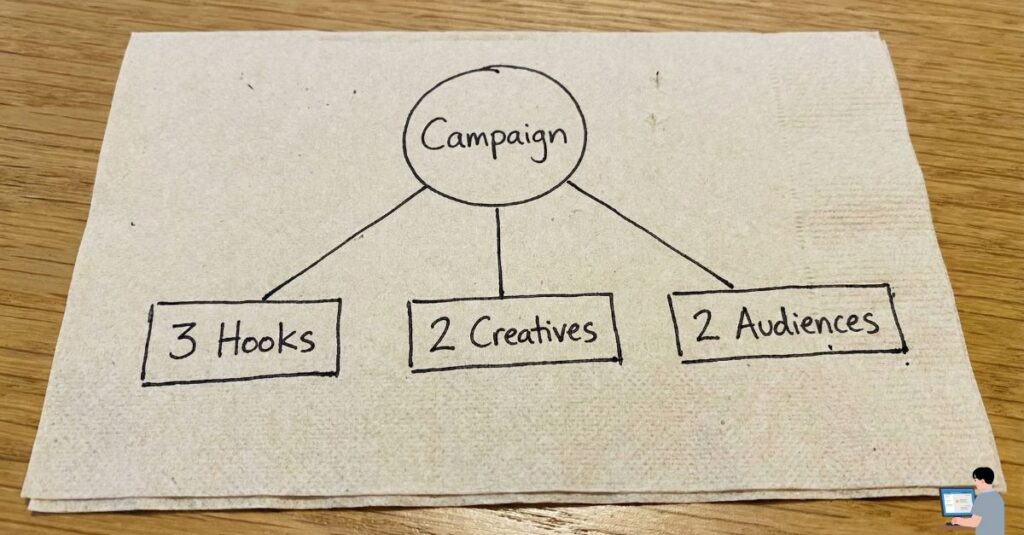
Many advertisers ask: What is the 3-2-2 method?
It’s a testing structure:
- 3 hooks
- 2 creatives
- 2 audiences
AI makes this easy. Generate 10 hooks, shortlist 3, and test instead of guessing.
How to Make AI Hooks Sound Human (Not AI)
This is a huge Google and Reddit question.
Do this:
- Ask for statements, not questions
- Feed customer reviews into AI and say: “Extract one-sentence truths customers actually say.”
- Add tone constraints: “Write like a calm expert, not a marketer.”
This alone removes 90% of “AI cringe.”
Which Emotional Triggers Work Best?
Across platforms:
- Curiosity → TikTok, Reels
- Specific results → Facebook, YouTube
- Social proof → Instagram
- Challenge/Doubt → High-ticket funnels
The best AI hook generator isn’t one tool—it’s the right prompt + context.
Free AI Hook Generators (What Actually Works)
People search for:
- Free AI hook generator
- Hook generator for Instagram
- Generate instant ad hooks free
Reality:
- ChatGPT / Claude / Gemini outperform most “hook tools”
- Dedicated tools repackage the same models with fewer controls
If you can prompt well, you don’t need another subscription.
FAQs: AI Ad Hooks & High-Converting Copy
1. How do I create an effective ad hook?
A strong ad hook stops the scroll in the first 3 seconds by targeting a specific pain, mistake, or desire. The most reliable formats are pattern disruptors, curiosity gaps, transformations, and direct benefits. Start with clarity, not cleverness.
2. What is the best AI hook generator?
There’s no single “best” tool. ChatGPT, Claude, and Gemini outperform most standalone hook generators when used with structured prompts. Results depend more on prompt quality than the tool itself.
3. Can AI create ads automatically?
Yes—AI can generate hooks, headlines, ad copy, and variations quickly. However, humans still decide strategy, positioning, and final selection. The best results come from AI + human judgment.
4. What is the 3-2-2 method for Facebook ads?
The 3-2-2 method tests:
- 3 hooks
- 2 creatives
- 2 audiences
AI makes this scalable by producing multiple hook variations instantly, reducing guesswork and speeding up testing.
5. How can I generate ad hooks for free?
You can generate unlimited hooks for Facebook, Instagram, and YouTube using free AI tools like ChatGPT or Gemini. The key is using clear constraints (platform, tone, word count, emotion).
6. How do I make AI hooks sound human, not robotic?
To avoid “AI-sounding” copy:
- Ask for statements, not questions
- Ban clichés like “Are you tired of…”
- Define tone clearly (calm, expert, non-hype)
- Feed real customer reviews or complaints
7. Can AI help identify customer pain points for hooks?
Yes. Ask AI to analyze your audience first—their fears, frustrations, and false beliefs—before writing hooks. This reverse-engineering approach produces far more relevant copy.
8. Which emotional triggers work best for ad hooks?
- Instagram: Curiosity, social proof, transformation
- Facebook: Clear outcomes, problem-solution
- YouTube: Authority, proof, skepticism
- TikTok: Pattern disruption
AI works best when you specify the emotion to target.
9. Can AI create a hook system instead of single hooks?
Yes. You can ask AI to build a Hook Matrix—multiple hooks across curiosity, FOMO, transformation, and benefit frameworks—making ad scaling easier and more consistent.
10. How do I use customer reviews to write better hooks?
Paste real reviews into AI and ask it to extract one-sentence truths customers use. These often outperform traditional marketing copy because they sound authentic and relatable.
Final Step: Play the Volume Game
Winning ads aren’t written—they’re discovered.
Use AI to:
- Generate 20–30 hooks in minutes
- Test 5–10 at once
- Kill losers fast
- Scale winners confidently
Let AI handle volume.
You focus on strategy.
Bottom Line
The best-performing ads in 2026 won’t come from inspiration.
They’ll come from systems.
These 5 prompts aren’t magic—but used correctly, they turn AI into a conversion machine.